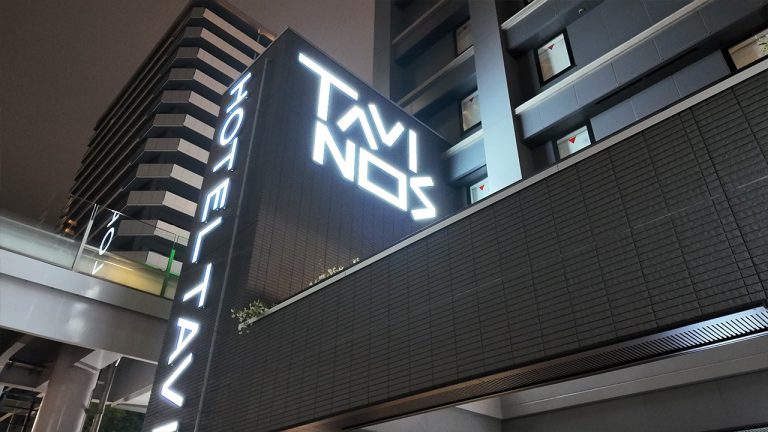
The manga theme in Hotel Tavinos Asakusa is not a single feature wall applied for photos. It runs from the “Wasshoi!” festival shout at the entrance through the lantern-hung neon lobby, up corridor carpets illustrated with festival scenes and fireworks, and into the room itself — where manga panel lines and sound effects cover the walls and bed frame, and the light switches are drawn as manga-style illustrations that are fully operational. Lift the screen curtain on the back wall and the room’s defining feature arrives: an unobstructed direct view of Tokyo Skytree. All of this at ¥8,300 per night in Asakusa.
Overview
Hotel Tavinos Asakusa sits 4 minutes from Tsukuba Express Asakusa Station on foot, and roughly 12 minutes from the Tokyo Metro Ginza and Toei Asakusa Lines — a position that puts Kaminarimon and Senso-ji within a 10-minute walk. The front desk and lobby are on the 2nd floor; self-check-in machines handle arrival smoothly with no waiting time. The lobby leans fully into a manga and matsuri (festival) concept: colorful lanterns hang alongside festival tower illustrations; tables are covered in manga sound effects; a giant monochrome Shishimai lion dance artwork fills one wall; a Hyottoko mask illustration greets you by the elevators. A shelf of ONE PIECE manga volumes is available to borrow and read in the room.
The amenity corner operates on a self-service pick-your-need format — toothbrush and pajamas in a wide range of sizes; plastic amenities like hairbrushes are available at the front desk on request, keeping single-use consumption intentionally low. A free drink corner provides coffee; sake and Ramune soda are sold at the back. A communal puzzle of the hotel logo sits on one of the tables, inviting small participation. A self-service cloakroom with pincode lockers is free before check-in and after checkout, making hands-free sightseeing practical. Laundry machines accept cashless payment, and availability can be checked in real time from the in-room TV.
Room & Amenities
The room on the 11th floor is 12 square meters. Manga illustrations cover the walls and bed frame entirely — sound effects, panel lines, and typography from floor to ceiling — but the monochrome palette of the furniture prevents the space from tipping into overwhelming. The room is immaculate. The candy-apple themed card key is a small but correct detail. Behind the screen curtain on the back wall is a small window with an unobstructed line of sight to Tokyo Skytree. In a neighborhood where that view commands significant premiums, the Tavinos price makes it feel like a legitimate bonus rather than a selling point hedged by asterisks.
Every inch of 12m² is handled deliberately. Storage above the bed expands vertical use; a large suitcase fits under the bed, alongside the kettle — stored there specifically to keep surfaces clear. The AC and TV remotes are tucked into the tissue case. A folding chair and table are stored under the wall-mounted TV and open into a usable compact workspace. The pillow has a firm, bouncy feel. Bedside controls include adjustable lighting, power outlets, and USB ports. A phone by the TV connects directly to the front desk with a single button and handles wake-up calls.
The bathroom runs in the same black-and-white theme — clean and fresh throughout. The vanity is a separate independent unit; compact, well-designed, with a washlet toilet. Towels and a Panasonic hairdryer are wall-mounted to save floor space. Water pressure is strong. The shower room at the back is compact but fully adequate.
Dining & Breakfast
There is no on-site breakfast. The morning after, I found a retro Jun-kissa style coffee shop in the neighborhood — worn sofas and floors, a one-page menu for drinks and one for snacks, handwritten checks. The egg sandwich with iced coffee: crispy toast, egg, ham, and cucumber. These places are becoming rare in Tokyo, and the Showa-era atmosphere is part of the meal. The simplicity is genuinely satisfying.
For dinner, Edo Niku Kappo Sasaya — near Asakusa Station, newly opened with a discount campaign running at the time of my visit — specializes in Gyunabe, the original Edo-period style of sukiyaki simmered in sweet miso. The preparation is theatrical: a server sautés sugar and long green onions tableside, adds domestic ribeye cubes to sear, and finishes with a large piece of cotton candy that dissolves the instant soy sauce is poured over it, rounding out the flavor in a way that is both unexpected and genuinely effective. Meringue tororo — whipped grated yam foam — serves as the dipping accompaniment; the combination of rich miso-coated beef and light dashi meringue is better than it sounds. An Umaki appetizer (dashi-rolled omelet with eel inside) opens proceedings, and a Samurai Soda served with a katana stirrer — unambiguously tourist-facing — closes the drinks order.
For an afternoon stop near Senso-ji, Kanmi Mitsuya runs “Mitsu Shiratama” — handmade rice dumplings that are freshly boiled, notably chewy, and served with kinako (roasted soy flour), mitarashi (sweet soy glaze), matcha tea, ice cream, and kanten jelly. The queue is usually long. Pouring kuromitsu black sugar syrup over the kinako dumplings and adding shichimi spice to the mitarashi produces a combination that is traditional in its components and specific in its pleasure.
Location & Access
Asakusa is one of Tokyo’s densest sightseeing areas, and the Tavinos position makes the most of it. Kaminarimon, Nakamise, Senso-ji, and the Hagoita Market in December are all within a 10-minute walk. The Toshi-no-ichi market at Senso-ji, held December 17–18 each year, is a 360-year-old tradition: stalls lined with Hagoita decorative paddles in designs from classical painted styles to paddles featuring modern celebrities. Originally sold as charm items to wish for a girl’s healthy growth and to fend off evil, the hand-worked artistry in the best examples is considerable. Senso-ji itself dates back nearly 1,400 years; it was designated as a prayer temple for the Tokugawa Shogunate, and the Ieyasu connection is credited with transforming Kaminarimon into Edo’s most bustling commercial district.
At night, Asakusa becomes a different place. The crowds thin, the lanterns come on, and Hanayashiki-dori takes on a red-lit warmth that reads as genuinely distinct from the daytime rush. The Rokkakudo hexagonal hall — the oldest building on the Senso-ji grounds, a Muromachi-era structure that survived World War II fires — is illuminated in a way that draws attention to its unusual shape. The Five-Story Pagoda catches light against the night sky. Denpoin-dori, lined with Andon-style period streetlights and the “Geba” (no-vehicle zone) signage borrowed from Edo-period samurai language, leads further into the entertainment district marked by an “I LOVE ASAKUSA” neon sign.
The Asakusa Underground Mall — Japan’s oldest existing underground shopping street, connected directly to the subway and carrying the atmosphere of post-war Tokyo intact — is worth an early morning detour. Fukuchan, a yakisoba counter inside the mall, serves chewy noodles in a rich sauce for ¥400, with gyoza and beef tendon at similarly Showa-era prices. It opens early. The fried egg add-on is ¥100 extra. Near Kaminarimon, MONKADO is a cosmetics shop stocked with bath bombs in colorful drawstring pouches and 365 varieties of hand cream in rotating Japanese patterns — every day of the year given a different design. Both are worth the small detour.
Final Verdict
Hotel Tavinos Asakusa delivers on two things simultaneously: a consistently executed manga-matsuri design concept that runs through the entire property without feeling cheap, and a Tokyo Skytree view from the bed that hotels at three times this rate would advertise as a primary feature. The 12m² room is compact and requires accepting creative storage rather than generous space. There is no on-site breakfast, and the nearest major Metro lines are a 12-minute walk rather than 4. Rates vary by season — check current prices on Agoda. For travelers who want to be in Asakusa properly — walking distance to Senso-ji, the Hagoita Market, and the illuminated night streets — Hotel Tavinos Asakusa makes a genuinely strong case for the price.