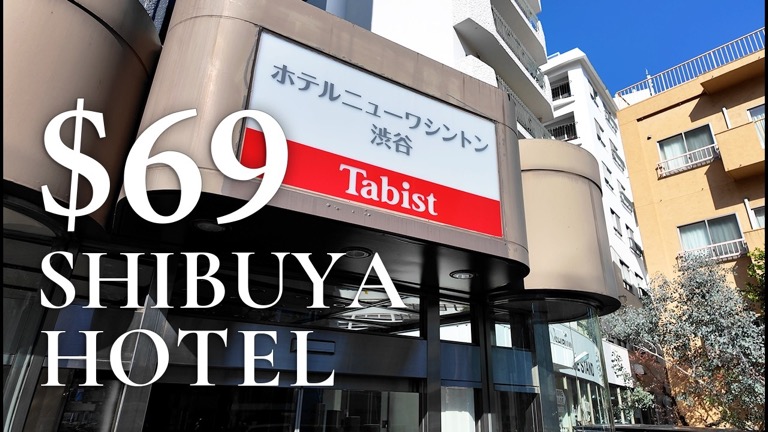
Tabist Hotel Mercury Asakusabashi is 77 meters from JR Asakusabashi Station’s East Gate. In a city where “convenient location” can mean a 10-minute walk, 77 meters is worth saying clearly: exit the ticket gate, walk one minute, and you are at the door. The building opened in the 1980s and has not been heavily renovated since — the Showa-era character is intact and honest about it, which for some travelers is precisely the appeal, and for others is useful information before booking.
Overview
The hotel sits in Taito Ward, served by both the JR Sobu Line and the Toei Asakusa Line at Asakusabashi Station. The building runs 8 floors; the front desk is in the basement, reached by stairs only from street level — there is no elevator access for the descent, a real consideration if you arrive with heavy luggage. The basement lobby is plain but functional: free coffee machine, a microwave for heating food, a soft drink vending machine, and a small info corner with local sightseeing details. A convenience store sits directly in front of the hotel. Check-in is from 3:00 PM; checkout by 10:00 AM, handled at the front desk with no self-service machines.
Tabist is a hotel brand with over 260 properties across Japan, ranging from business hotels to traditional inns. The Mercury carries the characteristics of an older property: dated but consistently maintained. The 2nd floor holds an Ootoya Japanese set-meal restaurant — accessible by elevator from inside the lobby during breakfast hours (7:30–10:00 AM), and via stairs from the front entrance at other times. A 24-hour laundromat is located 3 minutes away on foot; there is no coin laundry on-site.
Room & Amenities
Room 710 on the 7th floor is a 12m² semi-double. A physical metal key opens the door; the room lights require manual switching. The Showa-era atmosphere begins immediately: retro finishes, mismatched light fixtures, a painting of a French Renaissance-style castle floating on a lake above the desk. Several ceiling lights serve only as emergency backup during power outages — discovering this explains the room’s dimness. A shade lamp beside the bed compensates, and the bedside control panel adjusts overall lighting levels through a dimmer.
The bed is neatly made and the room is properly cleaned throughout. A small desk and chair handle light work; the fridge sits below the desk and requires manually switching on. The drawer holds the hotel guide and a laundry bag. The pillow falls in the middle of the firmness range. A temperature dial manages the air conditioning. In the corners, the age of the building shows clearly — but the luggage rack, shoehorn, three hangers for coats and jackets, and full-length mirror represent a practical equipment level that some hotels at this price miss. Room wear is a yukata; it may come loose during sleep, so bring your own pajamas if needed. All in-room information is accessible via QR code; in-room massage and aromatherapy services are also available.
The bathroom continues the dimly lit retro register. One notable detail: two toilet paper holders but no bidet — genuinely uncommon in a Japanese hotel of any era. Basic amenities (toothbrush set, razor) are in the bathroom; a hairbrush, cotton swabs, cleansing oil, and facial lotion are available at the front desk on request. Water pressure is adequate. The bathtub is narrow with an unusual shape — fine for showering, cramped for bathing — but the showerhead has a convenient on/off switch. Everything is clean, even if the dim lighting does not show it to best advantage.
Dining & Breakfast
Ootoya on the 2nd floor is the in-building dining option. Ootoya is a nationwide Japanese set-meal chain built on fresh, in-store-cooked food that feels less corporate than its scale suggests. For hotel guests, a ¥600 breakfast can be added on the morning of the stay, accessed by elevator between 7:30 and 10:00 AM. For dinner, I ordered the charcoal-grilled Atka mackerel and Moromi chicken set — a combination that covers both fish and meat in one order. The mackerel was thick and fatty, paired with grated daikon for contrast; the chicken had a clean smoky flavor from the charcoal. A seasonal miso soup upgrade (mushrooms and nameko, distinctly autumn) and a generous helping of shredded cabbage with dressing rounded out a well-balanced meal at under ¥1,500. Ootoya’s top-selling charcoal-grilled mackerel and the chicken-and-vegetable black vinegar stir-fry are both worth noting for repeat visits.
For breakfast the following morning, Saint Marc Café near the station’s east exit opens at 7:00 AM with morning sets until 11:00 AM. The chain is known throughout Japan for its chocolate croissants (“Choco Cro”) and runs 283 locations nationwide. The ham and cheese hot sandwich set with coffee came to ¥720 — a reliable, unpretentious breakfast that holds up to scrutiny. The café has 90 seats across two floors and moves at a relaxed pace in the early hours.
Location & Access
Asakusabashi Station connects the JR Sobu Line (Akihabara, Shinjuku, Chiba) and the Toei Asakusa Line (Asakusa, with onward Keikyu and Keisei connections to both Haneda and Narita airports). The area between the station and the Sumida River is quieter than much of Taito Ward, with a high concentration of smaller shrines reachable on foot in any direction.
Ginnanoka Hachiman Shrine, one of the most well-known shrines in Asakusabashi, dates from the late Heian period. Legend holds that Minamoto no Yoshiie stuck a ginkgo branch in the ground here and prayed for victory before battle — the shrine has since been associated with success in work and career advancement. The white-walled, green-roofed main hall is flanked by guardian lion-dogs with notably expressive faces, and a dragon statue presides over the water basin. The goshuin, available 9:00–16:30, is decorated with ginkgo leaf motifs; during the ginkgo season, limited-edition versions featuring intricate cut-out ginkgo leaf and nut designs are offered. Konoha Inari Shrine, on the same grounds, is worshipped for business and personal success.
Suga Shrine, directly next to the hotel, carries over 600 years of history. Its main deity, Susanoo-no-Mikoto, is the god of victory and long life. The current building was reconstructed after World War II in white concrete, with white guardian lion-dogs at the entrance. The goshuin — a crest of five melons with karahana (Tang flower) decoration — is issued with a flexible donation rather than a fixed price. Shinozuka Inari Shrine, a few minutes further into a quiet residential alley, enshrines Ukanomitama-no-Mikoto, the deity of food and grain.
Yanagibashi Bridge, a short walk from the hotel, was completed in 1929 and bears ornamental hairpin reliefs on its railings — a reference to the Edo-to-Meiji geisha district that flourished here before the area gradually gave way to modern apartments and office buildings. Yakatabune houseboats still dock near the bridge, a quiet remnant of the Sumida River cruise tradition.
Final Verdict
Tabist Hotel Mercury Asakusabashi is a straightforward proposition: a 40-year-old building that has been kept clean rather than renovated, in a location that is genuinely one minute from the station. The dim lighting, the physical key, the bidet-free bathroom, and the basement-only lobby with no elevator access are visible from the first step through the door — they come with the price, which is the honest exchange. What works well: the station proximity, the optional Ootoya breakfast on the 2nd floor, the shrine density of the immediate neighborhood, and the cleanliness that runs through the room despite the age of the finishes. Rates vary by season — check current prices on Agoda. For budget travelers comfortable with Showa-era character who want a central base within easy reach of Asakusa, Akihabara, and two airport lines, the Mercury delivers on the essentials without pretending otherwise.