The best thing about JR East Hotel Mets Tachikawa is something that takes about five seconds to appreciate and stays with you for the entire trip: the hotel is built inside JR Tachikawa Station. Not “a short walk from” — inside. Step out of the checkout box, scan your card key at the door, and you are at the ticket gate. You will not get wet in the rain, miscalculate your travel time, or wonder whether you’ve missed the last train. After the February 2025 renovation, the building that has occupied this position since 2008 now pairs that unmatched access with a Nordic-modern interior, yellow ginkgo accents, and a free 24-hour freshly ground coffee machine. At ¥9,900 per night, the case is difficult to argue with.
Overview
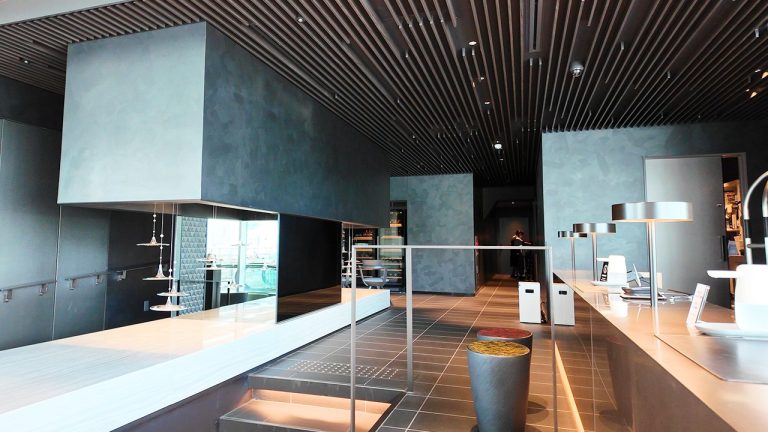
The hotel entrance sits on the 4th floor, reached by elevator from the South Exit of JR Tachikawa Station. A second entrance on the 2nd floor connects directly to the station concourse, though it closes late at night; the 1st floor entrance is available after midnight with a room key scan — security is solid throughout. The lobby was redesigned with what the hotel calls a “natural modern” aesthetic: yellow accents drawn from ginkgo trees and rapeseeds, wood and plant detailing on every guest floor, and hallway carpet patterned to resemble birch trunks and branches. It holds up well in person and sets a clear tone for the rest of the stay.
Check-in operates through a distinctive online system — a real-time screen where you speak to a staff member remotely. It runs smoothly, and the staff on the other side, visible and responsive, set a standard of service that carries through to checkout. Beside the check-in station, the free freshly ground coffee machine is available 24 hours. The amenity corner covers the expected — toothbrushes, cotton swabs, body towels, black and green tea bags — and several things that go beyond: a POLA skincare set, multiple bath salt varieties including a “Deep Sleep Scent” option, and Hotel Mets original aroma mist paper infused with a gentle, calming scent. Breakfast has no dedicated hall; instead, the stay includes a 1,000 yen voucher usable at three shops in the ecute Tachikawa mall connected to the station.
Room & Amenities
Room 506, a Normal Style single, is 16 square meters. The first impression when the door opens — natural light, bright interior, yellow accent on the bed — is legitimately good. The L-shaped layout positions the Simmons 140cm-wide semi-double bed in the corner to maximize usable floor space, and the result is a room that feels larger than the floor plan suggests. A side table and chair by the window create a small seating area separate from the desk — rare in this hotel category, and noticeably useful for longer stays.
The desk chair has a cutout at the top of the backrest for easy one-handed gripping, solving a persistent minor frustration without drawing attention to it. The drawer holds a multi-adapter, memo pad, hotel information, and a compact flashlight. Air conditioner instructions in Japanese and English are included. Two free bottled waters, a wall-mounted smart TV (YouTube and Netflix login supported), and a dedicated phone charging spot at the bedside complete the workspace setup. Two pillow types are provided: Nishikawa’s “Original Pillow” or a pipe-and-marshmallow version — a choice that signals genuine attention to sleep quality rather than a checkbox.
The closet is a proper closet, not wall hooks — an important distinction for anyone staying more than one night. Six hangers, deodorizing spray, and shoe polishers are included. The luggage rack is stored low near the floor. Two-piece pajamas in a relaxed free-size cut feel higher-quality than the standard hotel robe and work well in cold weather. For Residential Style guests, the room adds a fridge-freezer and in-room microwave suited to longer stays; the Normal room has a standard fridge. The 8th floor provides shared laundry (four washer-dryers with automatic detergent injection), an ice machine, vending machines, and a shared microwave for all guests.
The bathroom is a standard unit bath, clean and well-maintained. The shower curtain rail curves outward — a small but meaningful design choice that creates noticeably more space while showering and prevents the curtain from pressing against your legs. Water pressure is strong. Panasonic hairdryer. Hotel Mets original shampoo, conditioner, and body soap are in pump dispensers.
Dining & Breakfast
The 1,000 yen breakfast voucher covers three shops in ecute Tachikawa, all within the station building. Tully’s Coffee is the efficient morning option; Antendo focuses on handmade bread; Yamamotoyama is the historically grounded choice — a tea and seaweed specialist with over 300 years of history. After a heavy meat dinner the night before, I chose the “Plum and Shirasu Seaweed-Drenched Ochazuke”: three varieties of domestic seaweed piled on rice, with special hojicha dashi poured from a small pot at the table. The dashi is deep and earthy; the layered seaweed carries an oceanic intensity that becomes mellow after mixing. As a morning reset, it does the job precisely.
For dinner, Nikunosuke is about 6 minutes from the hotel on foot, in the South Exit’s izakaya belt. Run by a butcher shop, the menu centers on meat sushi — raw wagyu on sushi rice — and yakiniku grilled on volcanic rock from Mt. Fuji. The volcanic rock’s porous surface absorbs fat as the meat cooks, producing a cleaner result than a standard iron plate. Counter seating is comfortable for solo diners. I ordered the Chef’s 5-Piece Assortment, each piece seared table-side with a commentary on the cut, and the Tokachi Herb Beef Yukhoe — Hokkaido herb-raised beef prepared in a prosciutto-style method that concentrates the flavor without cooking it. Adding the restaurant on LINE brought a free glass of sparkling wine and a “Caviar Wagyu Roll” that arrived in a cloud of theatrical smoke. The quality throughout reflects the butcher-shop sourcing directly.
Location & Access
Tachikawa Station serves the JR Chuo and Nambu Lines, plus the Tama Monorail running north to south — making it the primary transport hub for the Tama area of western Tokyo. The South Exit is dense with restaurants, izakayas, and bars; the North Exit opens toward IKEA and the Lumine shopping complex. The AREAREA building nearby houses Ramen Square, where shops gathered from across Japan occupy one building, making a ramen detour easy regardless of what you’re in the mood for.
Tachikawa’s reputation as one of the most desirable places to live in Tokyo comes partly from this urban density and partly from proximity to green space on a scale that central Tokyo can’t match. Showa Kinen Park, a national commemorative park, is a short distance from the station; the Tamagawa Aqueduct provides a long, quiet riverside route for walking and cycling. Suwa Shrine — properly called Tachikawa Suwa Shrine — holds 1,200 years of tradition and is one of the most prestigious shrines in the Kanto region. Its main deity, Takeminakata-no-kami, is associated with business success and victory. The grounds are unusually spacious; giant trees create a genuine stillness that the city noise outside the torii does not penetrate. The original Edo-period structures were lost in a fire roughly 30 years ago and rebuilt using modern structural technology, with the intention of gathering additional protective deities to ensure the region’s peace. Within the Kagura hall, four more shrines are enshrined side by side, including Hoso Shrine (protection from infectious diseases) and one dedicated to an “Eye God” — legend holds that water gathered at the base of a sacred tree could cure eye ailments, a detail that resonates in an era of chronic screen fatigue. A permanent sumo ring on the grounds hosts dedication matches during the annual August festival. The manga Saint Young Men is set in Tachikawa, and Suwa Shrine appears in it — for readers of the series, the morning walk carries an extra layer.
Final Verdict
JR East Hotel Mets Tachikawa is one of the cleanest hotel propositions in the Tokyo area: the location inside the station removes every friction point between arrival and sleep, the 2025 renovation has produced a genuinely pleasant living space, and the staff — present, well-trained, and visibly engaged — make a stay that might otherwise feel transactional feel considered. The Normal Style room works well for one or two nights; the Residential Style’s microwave and fridge-freezer extend that significantly for longer visits. Rates vary by season — check current prices on Agoda. For anyone traveling through, based in, or exploring the Tama area of western Tokyo, this hotel earns its reputation honestly.